Sam Wanamaker
Once Upon a Time in HollywoodSam Wanamaker is the director of the Lancer pilot and the creative force who recasts a familiar television western in a more contemporary, volatile image. His work joins casting, costume, performance, and staging: he chooses Rick Dalton to play the villain Caleb DeCoteau, gives him a look that unsettles his established cowboy persona, and directs him to approach a ransom scene as a kind of dark theatrical sovereignty. In doing so, Wanamaker offers Rick not just a part, but a way to see how an older screen identity might be altered for a changing Hollywood.
Arrival and approach to Rick
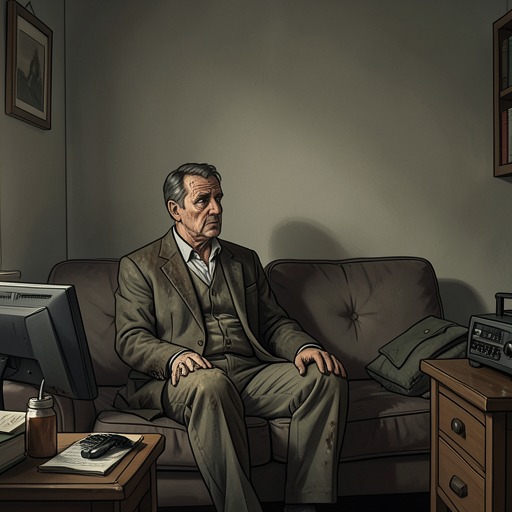
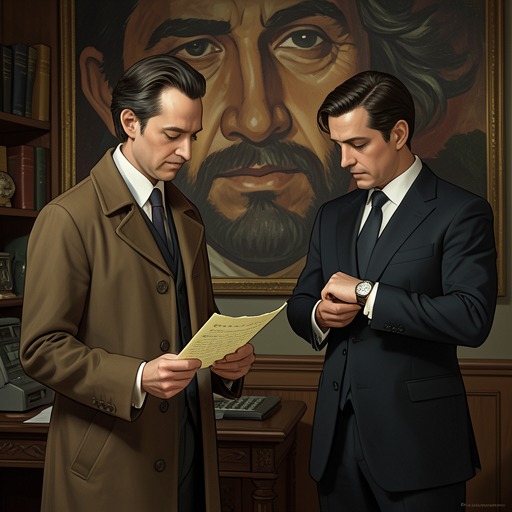
Wanamaker first enters the makeup trailer with conspicuous theatricality, announcing himself to Rick as if addressing the back row of the Old Vic. Rick, sitting with his face wet from a bowl of ice water, returns a dripping-handed handshake and apologizes for it. The moment establishes a contrast between the director’s buoyant confidence and the actor’s unsettled condition. Wanamaker is not put off: he tells Rick that he personally cast him and is delighted to have him in the pilot.
The distinction matters. The network selected the series leads, Jim Stacy and Wayne Maunder, but Wanamaker chose Rick. He explains that he wants to draw out a charged screen dynamic between Rick and Stacy, whose Johnny Lancer is the hero opposite Rick’s Caleb. Wanamaker expects the two actors’ antagonism to supply an additional layer beneath the scripted conflict. He asks Rick to remain professional while using his experience to help him get what he needs from Stacy, and describes their on-screen contest through the image of two powerful animals facing off. The direction treats their real casting contrast as material: Rick brings the history of a celebrated television cowboy, while Stacy is being launched as the new series hero.
Recasting the television western
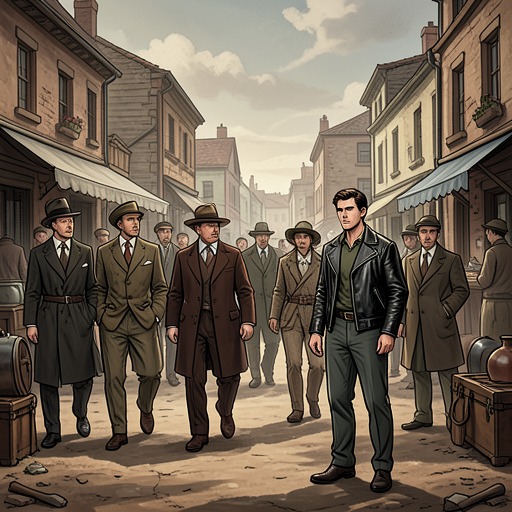
Wanamaker’s choices respond to the genre’s changing image. The pilot’s premise strikes Rick as a darker, more cynical variation on established ranch dramas: Murdock Lancer offers his estranged sons an equal share of his ranch empire if they help him defeat Caleb and his rustlers, making family reunion conditional on danger and work. Wanamaker’s production does not simply repeat that familiar structure. Its hard-edged patriarch, unusual lead, and violent conflict distinguish it from the gentler conventions Rick associates with older western television.
The director intends the series to carry some of the newer western’s atmosphere, even though a CBS show airing at 7:30 on Sunday nights cannot reproduce the violence of contemporary films. He pursues that change through visual design and characterization. Johnny Lancer, played by Stacy, is conceived as a shady, antiheroic lead rather than a straightforward good-guy cowboy. The script makes Johnny Madrid—the identity behind Johnny Lancer—central to the series, although such a mysterious, dangerous figure would more commonly appear as a guest character on another western. Wanamaker’s approach gives that kind of character the leading role.
The mustache dispute reveals how this revision is negotiated. Stacy wants Johnny to have a mustache, both to sharpen the character’s edge and to distinguish him from the lighter-haired Scott Lancer. Wanamaker supports the idea, but CBS rejects it for the hero and insists that the mustache belong on the heavy. When Rick asks about the disagreement, Wanamaker confirms that Stacy fought for it and that the network overruled them. The result turns a restriction into another source of antagonism: Rick wears the facial hair Stacy wanted, and Rick gradually warms to it partly because it irritates Stacy.
Costume and the transformation of Caleb
Wanamaker’s costume direction is specific about period and mood. He asks costume designer Rebekkah not to dress Caleb like the heavies on Bonanza or The Big Valley, but to find a style that has a contemporary sensibility without becoming anachronistic. His question is how 1969 and 1889 can meet in one outfit: Caleb should look as if he could walk into the London Fog and be fashionable. Rebekkah proposes a Custer jacket with fringe down the sleeves, dyed from tan to dark brown. The suggestion gives the character a recognizable western silhouette while connecting it to the period’s countercultural fashion.
At first, Rick doubts the transformation. In the makeup-trailer mirror, he worries that viewers will not recognize him. Later, dressed in Caleb’s boots, hat, and brown fringed jacket, he sees the costume reflected in the window of a western-set business. The dangling fringe emphasizes his gestures, and the whole outfit begins to feel usable rather than alien. Rick considers that Wanamaker may be right: the look does not resemble the familiar Rick, but it does resemble Caleb. Without his habitual pompadour, he also sees how the costume could make him appear less like an aging cowboy star and more like a modern actor. The reflection helps him understand Marvin Schwarz’s warning that he was an Eisenhower-era actor in a Dennis Hopper Hollywood. Wanamaker’s costume strategy therefore changes not only Caleb’s appearance but Rick’s view of the career image attached to him.
Rehearsal, interpretation, and staging
Wanamaker’s involvement extends beyond wardrobe and casting. He sits with Rick on the Lancer set to discuss Caleb, an unusual investment of time for a television director working under production pressures. He invites Rick to imagine a rattlesnake as his spirit animal, using an image rather than a technical instruction to guide the actor toward a particular presence. The scene also fits Wanamaker’s larger method: he makes character interpretation vivid and playable, seeking subtext and force rather than merely delivering plot information.
That method is clearest when he shows Rick the chair from which Caleb will make ransom demands for Mirabella. Rick admires the chair as a handsome piece of furniture; Wanamaker redirects him to think of it as a throne. Rick does not understand the reference to Denmark, but the director supplies the governing image: Caleb is a “sexy evil Hamlet.” The comparison turns a saloon chair into a theatrical seat of power and frames the kidnapping scene as more than a routine villain’s threat. Rick is initially exasperated by the Shakespearean language, yet he repeats the phrase rather than voicing his objection. When the scene with Mirabella is ready, Wanamaker calls “Action!” and the actors begin playing it. His elaborate metaphor thus ends in a concrete directing cue: an interpretive idea must become performance.
Significance
Wanamaker’s role in the pilot is to make the old and new westerns collide productively. He uses Rick’s established reputation rather than ignoring it, casting him as a heavy precisely so that audiences can see a familiar television cowboy in an unfamiliar position. At the same time, the costume, the rivalry with Stacy, and the theatrical conception of Caleb loosen Rick from the image he fears has become permanent. The character’s eventual defeat by Johnny Lancer can consequently carry a significance beyond the weekly triumph of a hero over a villain: it sets the new lead against an icon of western television and lets the new series announce its difference.
Wanamaker’s direction also recognizes the limits imposed by the network without surrendering the ambition behind the project. He cannot make a Sunday-evening CBS series as graphically violent as the new films, but he can pursue a tougher atmosphere through character, clothing, antagonism, and performance. His most consequential intervention is this coordinated reinvention: Caleb’s fringe and mustache, Johnny’s contested mustache, Rick and Stacy’s rivalry, and the throne-like chair all make the pilot’s altered western style visible and playable.